
Discrete-Event Manufacturing & Logistics Simulation
Built discrete-event models in FlexSim to represent multi-stage manufacturing flow and multimodal distribution, combining production routing, material handling, transport networks, and operational visualization.
Overview & Research Motivation
Developed discrete-event simulation models in FlexSim to study two interconnected operations problems: material flow through a manufacturing facility and movement across a distributed transportation network. The models use FlexSim's process objects, routing logic, task executors, 3D visualization, and dashboards to make system behaviour observable during simulation.
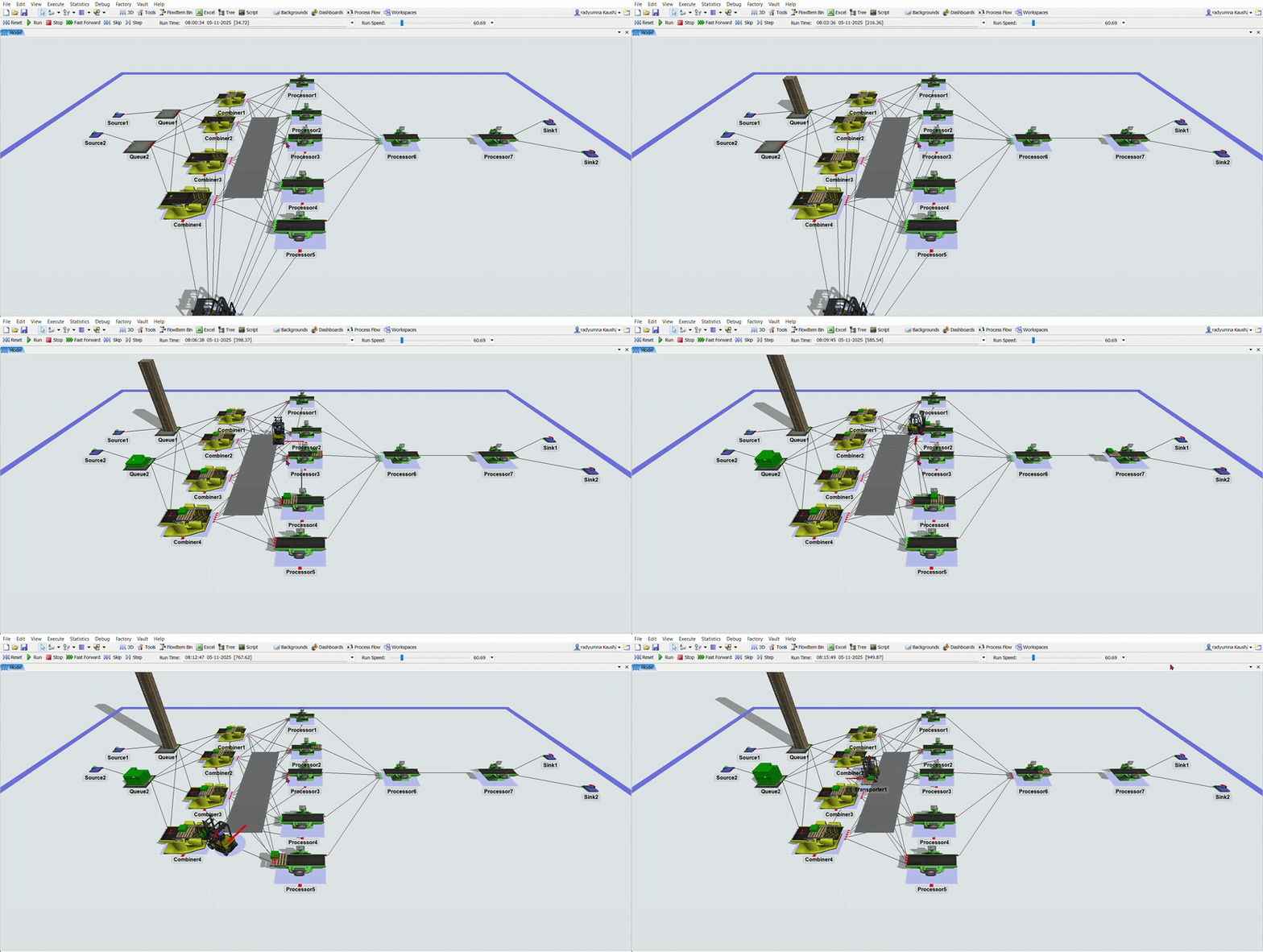
The manufacturing model represents a multi-stage production system. Multiple source streams introduce entities and components into separate queues, Combiner stations model assembly or consolidation stages, and work is distributed across parallel Processor stations. FlexSim connections and material-handling task-executor logic route entities through downstream processing before they leave through sink objects. The 3D layout makes work-in-progress movement, queueing, routing, and resource interaction visible across the facility.
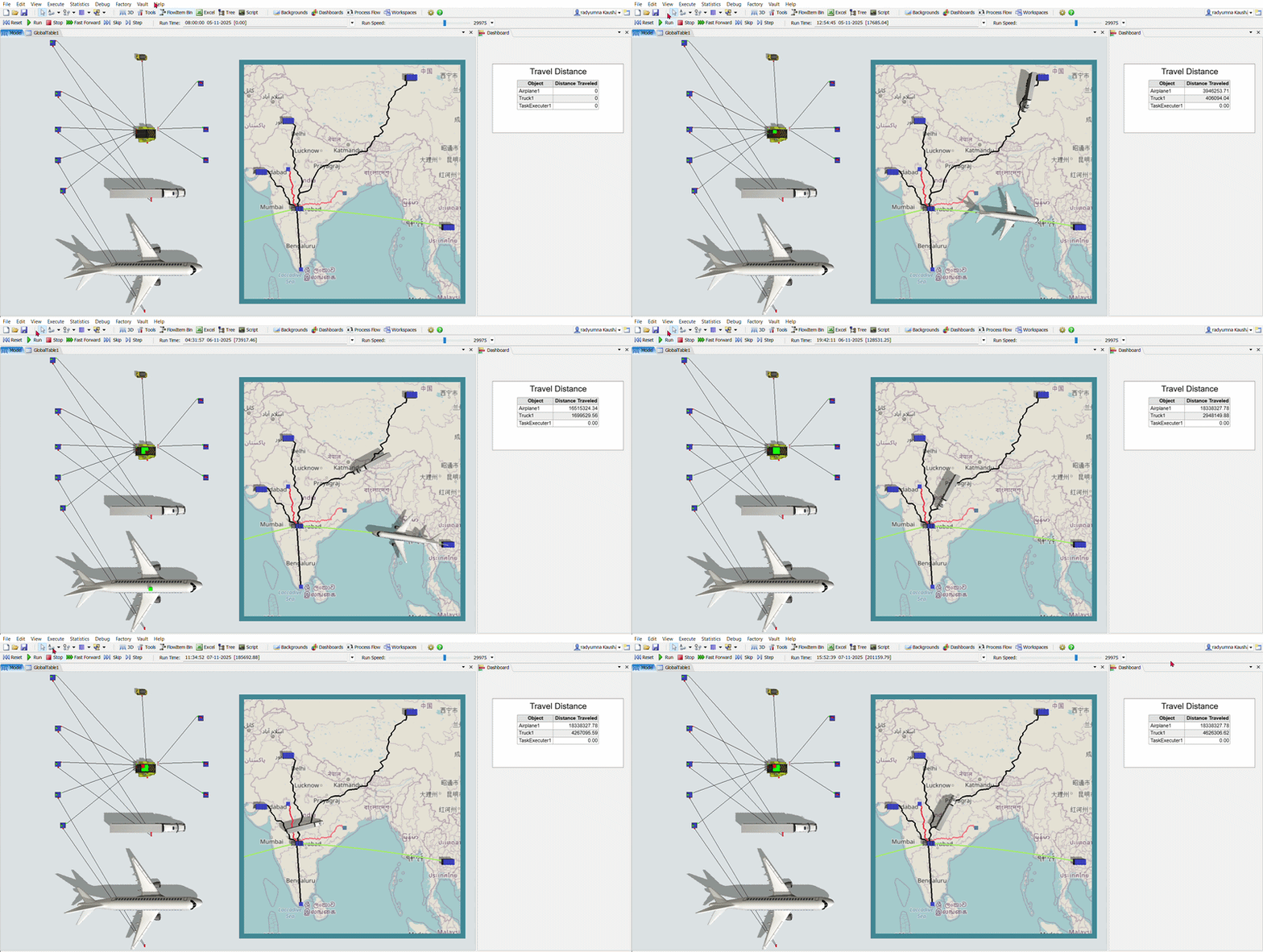
The logistics model represents a geographically distributed transportation network in which a central operating hub interacts with multiple destinations. Truck and aircraft resources move along defined road and air paths over a geographic map, while distinct route types show how movement is organized across the network. A live dashboard tracks travel distance for resources including the aircraft and truck, demonstrating FlexSim task-executor behaviour beyond a conventional factory-floor setting.
Project Media
The Core Systems Problem
- Representing how entities move, queue, combine, and divide across parallel and sequential stages of a manufacturing system.
- Modeling road-based and air-based resource movement across a distributed logistics network while keeping transport behaviour observable during simulation.
My Specific Technical Contributions
- Modeled a multi-stage production facility using sources, queues, combiners, parallel processors, material-handling logic, and final sink routing to visualize discrete manufacturing flow.
- Developed a map-based multimodal logistics simulation with truck and aircraft resources, distributed destinations, route-based movement, and live travel-distance tracking.
- Used FlexSim's discrete-event engine, 3D object model, routing connections, task executors, and dashboard instrumentation to represent and inspect dynamic production and transportation systems.
Simulation Models
Model 1: Manufacturing / Facility Simulation
Multiple sources and queues feed Combiner stations and parallel Processors. Material-handling and task-executor logic route work through later processing stages to final sink objects, with the 3D model visualizing WIP, queues, routing, and resource interaction.
Model 2: Multimodal Logistics Simulation
A central hub connects to distributed destinations through road and air routes. Truck and aircraft task executors move across a geographic map, and dashboard instrumentation tracks resource travel distance during the simulation.
Technical Stack & Tools
Connected Systems & Inquiries
A permissioned Cosmos SDK ledger for connecting supply chain state with MES and digital twin telemetry.
ESP32-based multi-sensor condition monitoring, signal filtering, and anomaly detection for pumps and motors.
A multi-level replacement framework combining economic life estimation, fleet prioritization, and dynamic programming for critical assets.